News & Insights
How to Choose the Right Transformer for Your Project in Africa (Without Overspending)
A Practical Guide to Smarter Transformer Investment Decisions
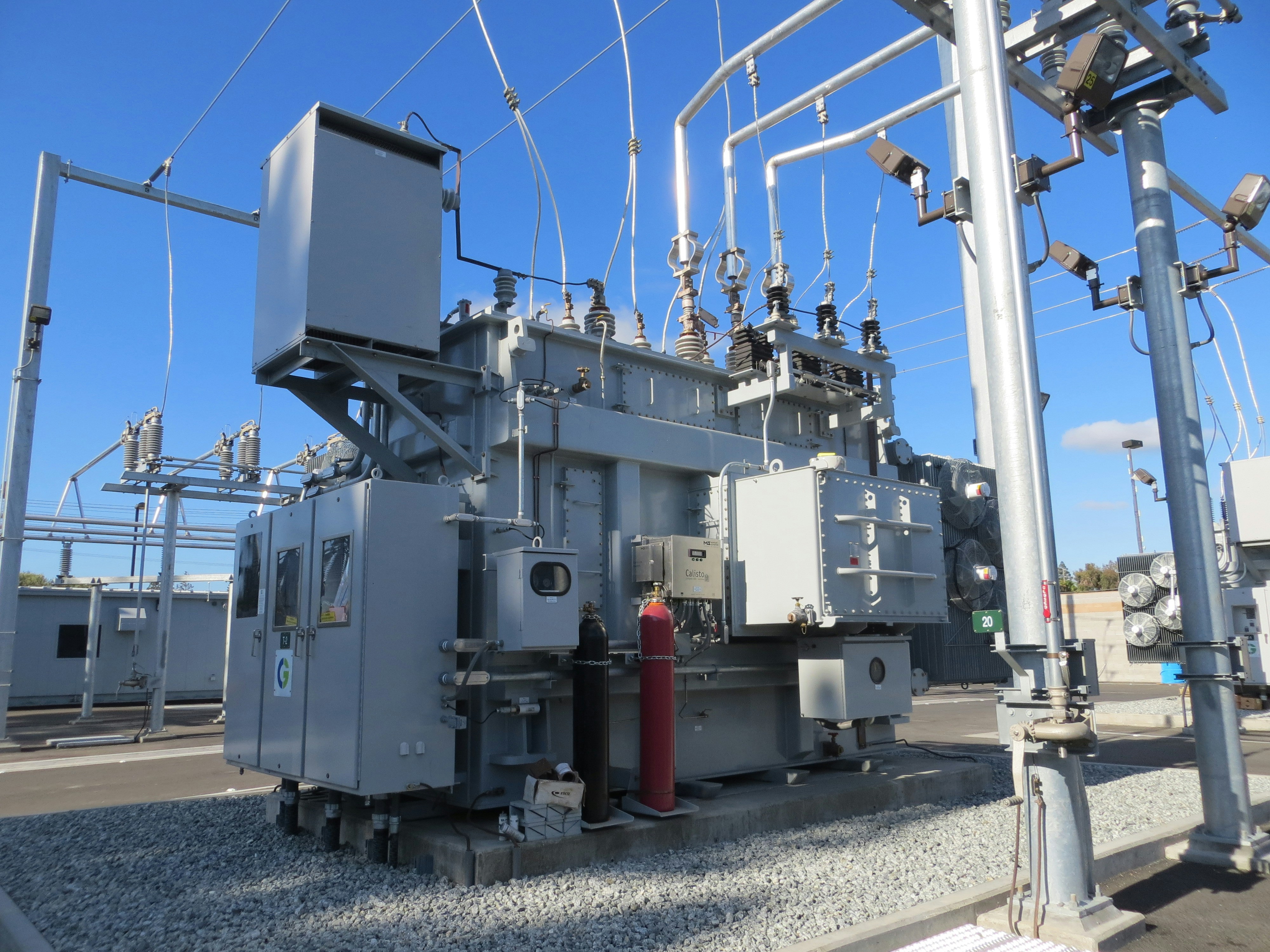
Avoid costly mistakes when selecting a transformer for your project. Learn how to match specifications to your actual needs, factor in future expansion, and optimise for lifecycle value rather than upfront savings.
Choosing a transformer is not simply a matter of selecting a capacity from a catalogue and comparing prices.
For a commercial building, manufacturing facility, solar project, data centre, residential development or industrial plant, the transformer becomes a critical part of the project's electrical infrastructure. Selecting the wrong unit can result in unnecessary capital expenditure, inefficient operation, overheating, voltage problems, premature failure or expensive upgrades later.
The objective is therefore not to buy the biggest transformer available.
It is to buy the right transformer for the application, environment, load and future requirements.
Start With the Actual Load
The first step is understanding what the transformer will actually be powering.
A transformer should be sized based on the project's electrical load profile—not simply the total connected equipment.
A project may have hundreds of kilowatts of connected equipment but significantly lower simultaneous demand. Conversely, certain industrial applications can produce large peak loads even when their average consumption appears modest.
Before selecting a transformer, determine:
Connected load
Maximum demand
Load factor
Starting currents
Motor loads
Harmonic-producing equipment
Continuous versus intermittent loads
Required power factor
Expected operating hours
This information creates a much more accurate picture of the transformer's actual requirements.
Don't Automatically Buy the Largest Transformer
Oversizing can appear safe, but it is not always economical.
A transformer operating significantly below its optimal loading range can introduce unnecessary capital costs and may reduce overall efficiency.
You are paying for capacity that may remain unused for years.
At the same time, undersizing creates a different set of problems: excessive loading, overheating, voltage drops and reduced equipment lifespan.
The objective is to find the appropriate balance between current demand and realistic future growth.
Plan for Expansion—But Be Realistic
Many African projects are developed in phases.
A property may initially contain one building but later add additional floors. An industrial facility may expand its production lines. A commercial development may add tenants.
This makes future load planning essential.
However, future expansion should be based on a realistic development plan rather than an assumption that demand will increase indefinitely.
A practical approach is to consider:
Current load + credible future demand + appropriate operating margin.
If a project is expected to expand substantially within three to five years, the transformer strategy should account for that expansion from the beginning.
In some cases, installing multiple transformers rather than one oversized unit can provide greater flexibility and redundancy.
Choose the Correct Voltage
Transformer selection begins with the electrical system itself.
You need to establish the required:
Primary voltage
Secondary voltage
Frequency
Phase configuration
Connection arrangement
Earthing requirements
Applicable utility requirements
The transformer must be compatible with both the incoming supply and the project's distribution system.
This sounds obvious, but mismatches can create major technical and financial problems.
For projects connected to a utility network, the utility's technical requirements should be confirmed before procurement.
Consider the African Operating Environment
A transformer designed for one environment may not perform identically in another.
African projects can operate in demanding conditions, including:
High ambient temperatures
Dust
Humidity
Coastal salt exposure
High-altitude locations
Unstable grid conditions
Outdoor installations
Limited maintenance access
Temperature is particularly important.
Transformers generate heat during operation. Higher ambient temperatures reduce the ability of the transformer to dissipate that heat, potentially affecting its available capacity and lifespan.
For hot climates, the appropriate design, cooling arrangement and installation environment need to be considered during specification.
Oil-Filled or Dry-Type?
The choice between oil-filled and dry-type transformers depends heavily on the application.
Oil-filled transformers are widely used in utility, industrial and outdoor applications. They can provide efficient cooling and are available across a broad range of capacities.
Dry-type transformers can be attractive for indoor installations, commercial buildings and applications where avoiding transformer oil is advantageous.
Neither technology is universally better.
The correct choice depends on the installation environment, fire requirements, maintenance strategy, space constraints, noise considerations and project economics.
Efficiency Matters More Than Purchase Price
A transformer can operate for decades.
That means the purchase price is only one component of its total cost.
A cheaper transformer with higher losses may cost considerably more over its operating life than a more efficient transformer with a higher initial purchase price.
The better question is therefore:
“What will this transformer cost me over its lifetime?”
Consider:
Purchase price
Installation
Energy losses
Maintenance
Expected lifespan
Downtime risk
Replacement costs
Financing costs
A slightly more expensive transformer may produce a significantly better return if its operating losses are lower.
Don't Ignore Harmonics
Modern electrical systems increasingly contain non-linear loads.
Variable-frequency drives, UPS systems, data-centre equipment, LED lighting, inverters and other electronic equipment can generate harmonics.
These can increase transformer heating and losses.
For projects with substantial electronic or industrial loads, the transformer specification should therefore account for harmonic conditions.
In some applications, a transformer with an appropriate K-factor or other harmonic-management characteristics may be necessary.
Ignoring this requirement can result in equipment operating outside its intended thermal conditions.
Protection Is Part of the Transformer System
A transformer does not operate in isolation.
Its protection system is equally important.
Depending on the application, this can include:
Circuit breakers
Fuses
Surge protection
Overcurrent protection
Differential protection
Temperature monitoring
Oil-level monitoring
Buchholz protection for appropriate oil-filled designs
Earthing systems
The appropriate protection depends on transformer type, size, application and system configuration.
A good transformer installed with inadequate protection is still a vulnerable installation.
Consider Redundancy for Critical Projects
Not every project needs redundancy.
But for critical facilities, it can be worth the additional investment.
Hospitals, data centres, major manufacturing facilities, financial institutions and other operations where downtime is extremely expensive may benefit from:
Multiple transformers
N+1 configurations
Automatic transfer systems
Independent electrical feeds
Backup generation
Battery energy storage
The question should not simply be:
“How much does redundancy cost?”
It should also be:
“How much does an outage cost?”
For some projects, the answer makes redundancy economically obvious.
Buy for Lifecycle Value, Not Just Initial Price
The cheapest transformer quotation is rarely the most useful comparison.
When evaluating suppliers, compare the entire package.
Look at:
Technical specification
Does the transformer actually meet the project's requirements?
Efficiency
What are the no-load and load losses?
Warranty
What protection does the manufacturer provide?
Testing
What factory acceptance and routine testing is included?
Delivery
What is the realistic lead time?
Installation
Who will install, commission and test the equipment?
After-sales support
Can replacement parts, servicing and technical support be obtained locally or regionally?
Track record
Has the manufacturer supplied comparable projects successfully?
A transformer is not simply a product.
It is a long-term infrastructure asset.
Local Support Can Save More Than a Cheap Purchase
One of the most overlooked factors in transformer procurement is after-sales support.
A transformer may operate reliably for years, but eventually it will require inspection, maintenance, testing or repair.
If specialist support is thousands of kilometres away, a relatively small technical problem can become a significant operational issue.
Projects in Africa should therefore consider the availability of:
Local technical teams
Spare parts
Testing equipment
Commissioning engineers
Maintenance services
Emergency response
Manufacturer representation
A slightly higher procurement cost can be justified if it substantially reduces downtime and maintenance risk.
The Five Questions Every Project Should Ask
Before approving a transformer purchase, ask five simple questions:
1. What is our actual maximum demand?
2. How much realistic additional capacity will we need?
3. What environmental conditions will the transformer operate under?
4. What will the transformer cost us over its entire lifecycle?
5. Who will support and maintain it after installation?
If these questions are answered properly, the procurement decision becomes significantly clearer.
The Right Transformer Is the One That Fits the System
Transformer selection should never be driven solely by price or nameplate capacity.
The right transformer is the one that matches the project's electrical requirements, operating environment, expansion plans, reliability requirements and long-term economics.
For African infrastructure projects, this becomes even more important as electricity demand increases and industries require greater reliability.
The goal is not to spend the least money today.
It is to avoid spending more money tomorrow.
A properly specified transformer can operate efficiently for decades, protect the wider electrical system and provide a reliable foundation for future growth.
Smart transformer procurement is not about buying bigger. It is about buying better—and buying for the life of the project.